Copyright and self-publishing - clear guidance and effective protection
If there is one thing I have seen repeated over the years in the publishing world, it is the same fear behind any manuscript: “What if someone steals my idea?”
That thought, even before the first draft, appears as a silent shadow. And it is normal. It is human. Those who write not only share words, but an intimate part of their history, their gaze, their wounds, their voice. Writing is not just technique: it is identity. That is why, when we enter the field of copyright, self-publishing and legal protection, we are not talking about cold papers or boring formalities, but about the necessary shield to defend what belongs to you: your creation.
Talking about copyright should not be a maze. In fact, it should be almost instinctive: you write something, you sign it, you own it. And in essence, that's how it works. From the moment a work exists - be it digital or handwritten, a song, a poem or a five hundred page novel - the law protects it. You don't have to register it for it to be yours. That's one of the most important points that almost nobody knows: authorship comes with creation, not registration. But registration exists for a very specific reason: to prove it. Because it is one thing to being an author, and another is to be able to prove it legally if someone tries to appropriate your work.
That's where the real conversation begins: how to protect what you write, how to do it effectively, and how to move safely in a world where any content can travel across the Internet at the click of a button.
Self-publish your book with freedom and responsibility
When you decide to self-publish, all this becomes even more relevant. In traditional publishing, it is the publishers who usually manage contracts, rights, assignments and licences. But in self-publishing, you are the one in control... and also in charge. You are author, publisher, manager, legal department and marketer at the same time. It can be scary at first, but it's also liberating. You have absolute power over your work: how it sells, where, in what format, for how much and in what language.
However, this power is meaningless without legal clarity.
Imagine that you have finished your book. You have proofread it, edited it and worked hard on a cover that represents it. Now you're about to upload it to Amazon KDP or any digital publishing platform. At what point can you say it's protected? The real answer is: from the minute you created it. But there is a difference between protection automatic and protection demonstrable. Without registration, yes, the work is yours, but if someone else copies it, you are the one who will have to prove it. With registration, the burden shifts: you are presumed to be the author until someone proves otherwise.
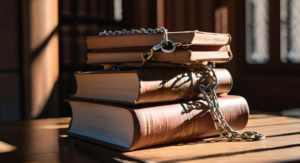
That is why registering a work is not paranoia, but prevention. Many authors confuse registration with transfer of rights. Registering your work does not mean handing it over to anyone or limiting its distribution. It is simply the legal equivalent of locking a lock. No one asks you to check the lock every day; but if a stranger tries to break in, you'll be glad it's there.
In Spain - as in most European and Latin American countries - copyright is divided into two types: moral rights and economic rights. Moral rights are those that can never be sold or disappear. They are the ones that bind you to your work as its creator. Even if in a hundred years your text becomes famous and your name is lost in literary history, legally it will still be yours. Economic rights, on the other hand, are those that allow you to exploit your work economically: translate it, sell it, adapt it for film, perform it, print it or distribute it digitally. These can be negotiated, licensed or even sold.
Self-publishing and practical protection of your work
And here comes one of the most common doubts: what happens to the rights if I self-publish on Amazon, Apple Books or any other digital platform? Am I giving anything away?
The correct answer - at least for today - is no. Self-publishing platforms tend to work with non-exclusive licences. This means that you allow your work to be sold through them, but you still own all the rights. If tomorrow you want to publish your book also in print with another company, publish it in another country or translate it yourself into German or Japanese, you can do so without asking for permission or justifying yourself to anyone.
Self-publishing gives you freedom. But that freedom requires knowledge. Because while the platforms respect the author's rights, they also set conditions. For example, Amazon KDP may require temporary exclusivity if you choose certain programmes, such as KDP Select, in order to include your work in Kindle Unlimited. This does not mean that Amazon will own your book, but it does mean that for a certain period of time you will not be able to distribute it digitally on other platforms. Knowing this before you agree is key to avoid frustration and misunderstandings.
There is also a very important point: the ISBN.
The ISBN does not protect your work, but it does identify it in the publishing market. It is the fingerprint of your book. If you self-publish and want to sell in physical bookshops or have professional distribution, having your own ISBN - and not one given by a platform - ensures you total independence. Having your ISBN means that the bibliographic record of your work belongs to you or your publisher, not to the company where you publish it. It is one more way of sustaining your autonomy as an author.
But let's get back to the emotion behind it all: self-publishing is not just a commercial act. It is an act of courage. It's looking at your text, with all its imperfections, doubts and revisions, and saying, “Yes. This deserves to exist in the world.” And that moment deserves protection.
The importance of knowing your copyright
Over the years, I have seen how a book can change an author's life: not by massive sales, but by meaning. A published work is an emotional closure. It is an open door to the reader. It is evidence that your voice is now part of the world and will no longer be stored in a forgotten archive.
And that is why it deserves to be protected. If you are going to publish - be it self-publishing or traditional publishing - I recommend you do some basics: find out more. Not from fear, but from the power of knowing your rights. When you know what to keep, what to negotiate and what to give up, you stop being a fearful artist and become a professional author.
Self-publishing is not plan B. It is the logical evolution of modern publishing. And with it, copyright is not an obstacle, but a tool.
Your book is your legacy. It doesn't matter if it is printed in a hundred copies or downloaded a thousand times. A published story is a story that has survived all the stages of the creative journey: the idea, the doubt, the discipline, the revision, the insecurity, the perfectionism and, finally, the courage to show it.
The most important right you have as an author is not legal, but existential: the right to be read, to exist through your words and to leave an invisible mark on someone you may never meet. The legal is only there to protect that connection.
So write. Publish. Share. But do so in the knowledge that your work belongs to you. And that there are tools, registrations, ISBNs, contracts and licences whose purpose is not to complicate your life, but to ensure that your voice remains your own. Because in the end, publishing is not just about putting a book out into the world. It is about opening a door. And that door, like everything valuable, deserves a lock, a key and a name. Yours.
Resources:
- https://editorialesyopiniones.com/publicar-un-libro-en-espana-2025/
- https://www.cedro.org/blog/articulo/blog.cedro.org/2022/10/19/derechos-de-autor-y-autopublicaci%C3%B3n
- https://www.legaltoday.com/opinion/articulos-de-opinion/son-un-fraude-las-editoriales-de-autoedicion-2025-08-28/
- https://marielacervino.com/consejos-escritores/como-publicar-un-libro/
- https://infinityideas.studio/escritores/aspectos-legales-a-tener-en-cuenta-antes-de-publicar-tu-obra/

8 Authors Who Should Never Have Signed Their Works as «Anonymous».»
PLANET 2024 AWARD - PALOMA SÁNCHEZ
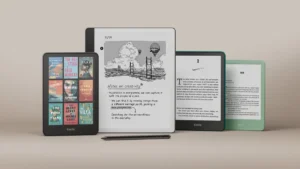
AMAZON RELEASES A NEW KINDLE [2024].
 Español
  English (UK)